
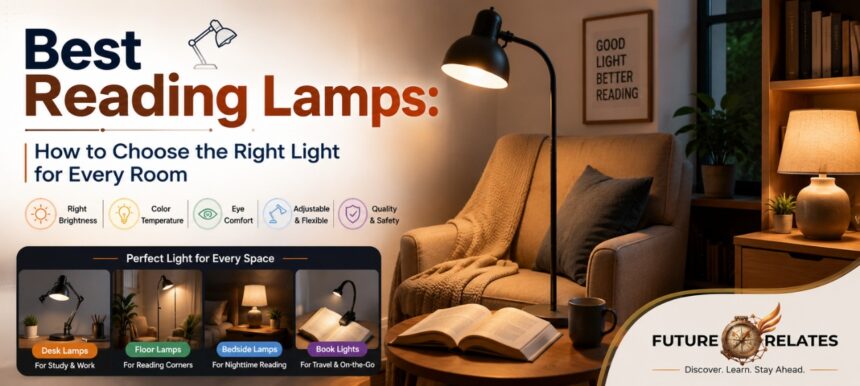

Ever tried to finish a good chapter under a dim ceiling light and ended up squinting the whole time? Yeah, me too. The right lamp changes everything. It softens tired eyes, keeps you focused longer, and makes any corner feel like a proper reading spot.
- What Makes a Good Reading Lamp?
- How Bright Should a Reading Lamp Be?
- Best Color Temperature for Reading
- Best Types of Reading Lamps
- Floor Lamp vs Desk Lamp vs Book Light
- Features to Look for in the Best Reading Lamps
- Best Reading Lamps for Different Rooms
- Best Reading Lamps for Different Readers
- How to Place a Reading Lamp Correctly
- Common Mistakes to Avoid When Buying a Reading Lamp
- Best Reading Lamp Features for Eye Comfort
- How to Choose the Best Reading Lamp for Your Needs
- Final Thoughts on the Best Reading Lamps
- FAQ
Here’s the thing: good lighting isn’t just about seeing the words. It affects your comfort, your focus, and even how your eyes feel at the end of the night. A harsh bulb creates glare and shadows. A warm, well-placed glow keeps you cozy and reading way past your bedtime.
This guide walks you through the Best reading lamps for every room, every reader, and every budget. We’ll cover brightness, color temperature, lamp types, smart features, placement tricks, and the little mistakes people make before buying. Let’s get into it!
What Makes a Good Reading Lamp?
A great reading lamp does three jobs well: it points light where you need it, it kills glare, and it lets you adjust things easily. Miss any of those, and your eyes pay the price.
|
Feature |
Why It Matters |
What to Look For |
|---|---|---|
|
Focused light |
Lights the page, not the whole room |
Directional beam, adjustable head |
|
Glare control |
Prevents eye strain and shadows |
Diffuser, frosted cover, dome shade |
|
Adjustability |
Aims light at your book comfortably |
Gooseneck, swing arm, tilt head |
|
Brightness |
Enough for text, not so bright it hurts |
400–450 lumens, dimmable |
|
Color temperature |
Sets the mood and eases eyes |
2700K–3000K warm, 4000K+ cool |
Focused Light vs Ambient Light
Focused light lands right on your page. It’s what you want for actual reading. Ambient light fills the room with a soft, general glow, great for mood, but weak for text. The best reading lamps give you a focused pool of light with just enough spill to keep the space comfortable.
Why Glare Control Matters
Glare is the sneaky enemy. An exposed bulb throws harsh light straight into your eyes, and you’ll feel it after twenty minutes. A frosted cover, acrylic diffuser, or fabric shade spreads the light evenly. Glare-free lighting means smoother reading and less fatigue.
The Role of Adjustability
A lamp you can’t aim is half useless. Gooseneck arms bend, swing arms reach, and pivoting heads tilt. That flexibility lets you position the beam at seated eye level without shadows falling across the page.
How Bright Should a Reading Lamp Be?
Brightness is where most people guess wrong. Too dim and you strain. Too bright and you get glare bouncing off the page.
Understanding Lumens and Lux
Lumens measure total light output. Lux measures how much of that light actually hits your book. For comfortable reading, aim for around 1800 lux on the page. A lamp with 400 to 450 lumens usually nails that sweet spot for close-up reading.
Why Brighter Is Not Always Better
More lumens sounds better, but 1200 or 1500 lumens can flood a small space and cause reflections. What matters is targeted illumination, not raw power. That’s why dimmable lamps win, you dial in exactly what your eyes need.
Best Brightness Range for Different Setups
- Reading in bed: 200–450 lumens, warm and gentle
- Sofa or armchair reading: 400–520 lumens with a focused beam
- Desk and study work: 520–1200 lumens for detailed tasks
Best Color Temperature for Reading
Color temperature, measured in Kelvin, decides whether your light feels cozy or crisp.
Warm Light for Bedtime Reading
Warm white in the 2700K to 3000K range feels soft and relaxing. It reduces blue light, so your brain winds down naturally before sleep. This is the go-to for late-night reading and sleep-friendly lighting.
Cool Light for Studying and Focus
Cool white between 4000K and 6500K mimics daylight. It keeps you alert and sharp, perfect for study sessions, laptop work, and concentration-heavy reading.
When to Choose Adjustable Color Temperatures
Can’t decide? Get a lamp with adjustable color temperature. Many offer 3 color temperatures, and some fancy ones push up to 13. Warm for evenings, cool for mornings, one lamp does it all.
Best Types of Reading Lamps
Floor Lamps for Reading Corners
A slim floor lamp or classic pharmacy lamp is ideal for a reading nook. Overhead floor lamps arch the light down over your shoulder, giving wide page coverage without eating desk space.
Desk Lamps for Study and Work
Desk lamps and swing arm lamps shine for focused tasks. Look for a 350-degree swing arm or 360-degree rotation so you can aim precisely across a 48-inch desk.
Bedside Lamps for Nighttime Reading
Bedside lamps, nightstand lamps, and bedside wall sconces keep light close and low. A clamp lamp or headboard lamp works wonders if your nightstand is tiny.
Book Lights for Portable Reading
Clip-on book lights, bookmark lights, and neck reading lights are the champions of travel. Lightweight at just 1.45 ounces, rechargeable, and perfect for reading without disturbing your partner.
Floor Lamp vs Desk Lamp vs Book Light
Which Is Best for Sofas and Armchairs
A floor lamp wins here. It stands tall beside your chair, casts a wide pool of light, and doubles as ambient lighting once you close the book.
Which Is Best for Bedsides
A bedside lamp or swing arm bedside lamp. It sits at seated eye level, tilts easily, and keeps the glow gentle for nighttime reading.
Which Is Best for Travel and Small Spaces
A clip-on book light, hands down. Cordless, compact, and USB-C rechargeable, it slips into any bag and clamps onto paperbacks or hardcovers alike.
Features to Look for in the Best Reading Lamps
Dimmable Brightness
Stepless dimming from 0% to 100% lets you fine-tune the glow. It’s honestly one of the most underrated features for eye comfort.
Adjustable Arms and Goosenecks
A flexible gooseneck or articulated arm bends the light exactly where you want it. No shadows, no awkward angles.
Rechargeable and Cordless Options
USB rechargeable lamps free you from outlets. Look for a solid battery, a 1200 mAh cell can give you 50 to 80 hours of runtime, with a quick 2.5-hour charging time.
Diffusers and Flicker-Free LEDs
Flicker-free LEDs protect your eyes during long sessions. Pair them with an anti-glare diffuser or frosted cover for smooth, even light.
Smart Controls and Remote Features
Smart lamps add touch controls, remote operation, memory settings, and voice control through Alexa, Google Assistant, or Siri. Handy when you don’t want to leave your cozy spot.
Best Reading Lamps for Different Rooms
Living Room Reading Lamps
A modern reading floor lamp beside the sofa gives focused light plus a warm ambient wash. Pick one with a weighted base for stability.
Bedroom Reading Lamps
Warm, dimmable bedside lamps keep things calm. A swing arm model saves nightstand space and won’t wake your partner.
Home Office Reading Lamps
A desk task lamp with cool light and wide beam coverage keeps you sharp through study sessions and paperwork.
Reading Lamps for Small Apartments
Go compact! A slim floor lamp or clamp lamp with a small footprint delivers big light without crowding your space.
Best Reading Lamps for Different Readers
Best Reading Lights for Book Lovers
Avid readers want both-page illumination and adjustable brightness. A floor lamp with a wide beam covers open hardcovers beautifully.
Best Reading Lights for Seniors
Higher brightness, high CRI, and glare-free light matter most here. Cool-to-neutral tones improve contrast on the page.
Best Lights for Students
A cool white desk lamp with USB charging and multiple brightness settings keeps focus locked in during long study nights.
Best Lights for Bedtime Page Turners
A warm, dimmable book light or 1600K amber lamp lets you read late without ruining your sleep.
How to Place a Reading Lamp Correctly
Best Placement Beside a Chair or Sofa
Place the lamp slightly behind and to the side of your shoulder. Light should fall over you onto the page, not into your eyes.
Best Bedside Lamp Positioning
Keep the light source near eye level when seated, and angle the head downward toward your book.
How to Reduce Shadows and Glare
Aim the beam from the opposite side of your writing hand. Use a diffuser to soften the edges and cut reflections.
Common Mistakes to Avoid When Buying a Reading Lamp
Choosing Style Over Function
A gorgeous lamp that throws harsh light isn’t worth it. Function first, looks second.
Using Harsh Overhead Light
Overhead ceiling light creates shadows on the page. A dedicated task light always reads better.
Ignoring Lamp Height and Beam Direction
A lamp too short or too tall throws light wrong. Match the height to your seated eye level.
Buying a Lamp That’s Too Bulky
Big lamps overwhelm small rooms. Measure your space before you buy.
Best Reading Lamp Features for Eye Comfort
Glare-Free Shades and Diffusers
An anti-glare diffuser, milky filter, or dome shade spreads light evenly and protects your eyes.
Warm Light and Blue-Light Reduction
Warm tones and blue-light reduction ease evening reading and support better sleep.
CRI, Flicker-Free Output, and Consistent Coverage
Aim for CRI 90+ for true-to-life colors, flicker-free LEDs for steady light, and even page coverage from edge to edge.
How to Choose the Best Reading Lamp for Your Needs
For Bedtime Reading
Warm 2700K–3000K light, dimmable, quiet, and partner-friendly.
For Work and Study
Cool 4000K–6500K light, bright, with an adjustable arm and wide coverage.
For Compact Rooms
Slim, space-saving design with a small base or clamp mount.
For Decorative Reading Nooks
A stylish floor lamp that blends focused reading light with cozy ambient glow.
Final Thoughts on the Best Reading Lamps
To be honest, the best reading lamps aren’t the flashiest, they’re the ones that fit your space, protect your eyes, and let you read for hours without a second thought. Nail the brightness, the color temperature, and the placement, and you’re set.
Best Overall Reading Lamp Characteristics
Adjustable, dimmable, glare-free, flicker-free, and just the right warmth for your reading spot.
Quick Checklist Before You Buy
- 400–450 lumens for close reading
- Warm light for bed, cool light for study
- Dimmable and adjustable head or arm
- CRI 90+ and flicker-free LEDs
- Anti-glare diffuser or shade
- Right size for your room
FAQ
What type of lamp is best for reading?
It depends on where you read. Floor lamps suit sofas and reading corners, desk lamps work for study, bedside lamps fit nightstands, and book lights are best for travel.
What color light is best for reading at night?
Warm white between 2700K and 3000K. It reduces blue light and helps you relax before sleep.
How many lumens do I need for reading?
Around 400 to 450 lumens for close-up reading. Desk and detailed tasks may need up to 1200 lumens.
Are LED reading lamps good for the eyes?
Yes, especially flicker-free LEDs with a high CRI and a good diffuser. They give steady, even light that’s easy on the eyes.
Is a floor lamp or table lamp better for reading?
Floor lamps are better for chairs and sofas thanks to their height and wide coverage. Table lamps suit bedsides and desks where space is limited.
Where should a reading lamp be placed?
Position it beside and slightly behind your shoulder, angled down toward the page. This lights your book evenly and keeps glare out of your eyes.
For More Information Visit: https://futurerelates.co.uk/