
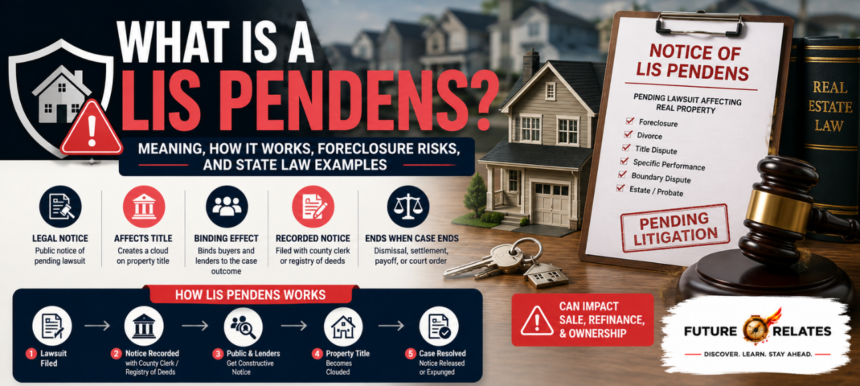

A lis pendens is one of those legal terms that sounds scary until you actually understand it. In plain words, a Lis pendens is a public notice that says a piece of real property is tied up in a pending lawsuit. If you’re buying, selling, or fighting over a home, this little notice can change everything. Let’s break it down the simple way.
- Lis Pendens Meaning in Real Estate and Law
- What Is a Notice of Lis Pendens?
- How Lis Pendens Works
- When a Lis Pendens Is Commonly Used
- Does a Lis Pendens Mean Foreclosure?
- Can You Sell a Property With a Lis Pendens?
- How to File a Lis Pendens
- How Long Does a Lis Pendens Last?
- How to Remove, Release, or Expunge a Lis Pendens
- Doctrine of Lis Pendens Under Section 52
- State-Specific Examples of Lis Pendens
- What Happens After a Lis Pendens Is Filed?
- FAQs About Lis Pendens
- Final Takeaway: Why Lis Pendens Matters in Property Law
Lis Pendens Meaning in Real Estate and Law
Here’s the thing about a Lis pendens: it isn’t a punishment and it isn’t a judgment. It’s a warning flag attached to property records that tells the world a legal fight is happening over that land.
|
Quick Fact |
Details |
|---|---|
|
Literal meaning |
“Suit pending” or “litigation pending” (Latin) |
|
What it does |
Gives constructive notice of a pending lawsuit |
|
Where it’s filed |
County clerk or registry of deeds |
|
Common triggers |
Foreclosure, divorce, specific performance, title disputes |
|
Main effect |
Creates a cloud on title |
|
How it ends |
Dismissal, settlement, payoff, or court-ordered expungement |
What “lis pendens” means in Latin
The phrase comes straight from Latin. “Lis” means lawsuit or dispute, and “pendens” means pending or hanging. Put them together and you get a lawsuit that’s still waiting for a final decision.
Why it is called “litigation pending” or “suit pending”
People use “litigation pending” and “suit pending” because that’s exactly what’s going on. A case has been filed, but no final judgment exists yet. The property sits in limbo until the court sorts things out.
How the term applies to real property disputes
A lis pendens only matters when a lawsuit touches real property, like a house, a lot, or a parcel of land. If the claim doesn’t affect the title or ownership of that property, a lis pendens usually doesn’t belong on the record.
What Is a Notice of Lis Pendens?
A notice of lis pendens is the actual recorded document. Think of it as the paperwork that makes the warning official and visible to anyone doing a title search.
Public notice of a pending lawsuit
Once recorded, it becomes part of the public records. Any buyer, lender, or title company that checks the land records will see it. That’s the whole point: nobody can later claim they didn’t know.
How a lis pendens attaches to property records
The notice gets filed with the county clerk or the registry of deeds, depending on the state. From that moment, it’s linked to the property’s chain of title. It stays there until it’s released or expunged.
Difference between a lis pendens and a lien
This trips people up all the time. A lien is a claim for money owed. A lis pendens is just notice that a lawsuit is happening. It doesn’t collect a debt. It simply says, “Heads up, this property is subject to litigation.”
How Lis Pendens Works
To be honest, the mechanics are simpler than they look. A lawsuit gets filed, the notice gets recorded, and everyone dealing with the property is now legally warned.
Constructive notice to buyers and lenders
The magic word here is “constructive notice.” Even if a buyer never actually reads the filing, the law treats them as if they knew. That protects the person who filed the claim.
Why pending litigation affects title and transfer
Pending litigation freezes the risk in place. Because ownership could shift when the case ends, the title becomes uncertain, and uncertainty scares off buyers and banks.
How third-party purchasers become bound by the case outcome
What’s interesting is that anyone who buys the property during the lawsuit, a purchaser pendente lite, takes it subject to the final decree. So a subsequent buyer can inherit the outcome, whether they like it or not.
When a Lis Pendens Is Commonly Used
A lis pendens shows up in a surprising number of situations. Here are the big ones.
Foreclosure and mortgage default cases
When a borrower stops paying, the lender may start a foreclosure lawsuit. A notice of lis pendens often marks that starting point in judicial foreclosure states.
Divorce and marital property disputes
Spouses fighting over a marital home sometimes file one to stop the other from quietly selling or transferring the property.
Specific performance and real estate contract disputes
Say a seller signs a purchase and sale agreement and then backs out. The buyer can sue for specific performance and record a lis pendens to lock the property until the contract dispute is resolved.
Quiet title, boundary, and ownership claims
Quiet title actions, boundary disputes, and adverse possession fights all involve who really owns what. A lis pendens keeps the property in place while the court decides.
HOA, tax lien, estate, and probate-related disputes
It also pops up in HOA lien enforcement, tax lien and municipal lien cases, and probate or estate battles among heirs.
Does a Lis Pendens Mean Foreclosure?
Not always. This is a common fear, so let’s clear it up.
When lis pendens signals the start of a foreclosure lawsuit
In many judicial foreclosure states, yes, the notice can mark the moment the foreclosure action begins, usually after a notice of default.
What it means for homeowners
For a homeowner, it’s a serious signal. It means the clock is ticking and you should talk to an attorney fast. Ignoring it rarely ends well.
What it does not mean yet
Here’s the reassuring part: a lis pendens is not a foreclosure auction and not a final judgment. Your home hasn’t been sold. There’s still time to respond, settle, or fight.
Can You Sell a Property With a Lis Pendens?
Technically yes, but practically it’s rough.
Why buyers and title companies become cautious
A title company may refuse to insure the deal. Buyers walk away because nobody wants to inherit a lawsuit.
How a lis pendens creates a cloud on title
The recorded notice puts a cloud on title, which drags down marketability and makes financing hard to secure.
Whether a sale is still legally possible
You can still transfer ownership, but the new owner takes it subject to the pending outcome. That’s a tough sell for most buyers.
How to File a Lis Pendens
Filing isn’t just paperwork you slap on any property you dislike. There are rules.
Requirement of a pending lawsuit
First, an actual lawsuit must already exist. No suit, no valid lis pendens.
Requirement that the claim affect real property
Second, the claim has to directly involve the property’s title, ownership, or possession.
Recording with the county clerk or registry of deeds
Third, you record the notice with the county clerk or registry of deeds in the county where the land sits.
Verified complaint, endorsement, and service requirements
Many states want a verified complaint, sometimes a court endorsement, and proper service on the other side. Skip these and the filing can be challenged as improper.
How Long Does a Lis Pendens Last?
Duration while litigation is pending
Generally, it lasts as long as the case is pending. When the lawsuit ends, the notice should be cleared.
Why some lis pendens remain for months or years
Court cases drag. Appeals, delays, and settlement talks can keep a lis pendens active for months or even years.
Jurisdiction-specific timelines and exceptions
Some states set specific deadlines and cancellation rules, so the timeline really depends on local law.
How to Remove, Release, or Expunge a Lis Pendens
Settlement, dismissal, or payoff
The cleanest exits are a settlement, a dismissal of the lawsuit, or paying off the underlying debt. A release of lis pendens then gets recorded.
Motion to expunge or dissolve
A property owner can file a motion to expunge asking the court to remove it, often arguing the claim has no real basis in the property.
Wrongful or improper filing challenges
If someone filed a wrongful or improper notice, that alone can be grounds to strike it.
What happens after trial or final judgment
Once a final judgment lands, the losing party’s notice usually gets expunged, sometimes with the court’s direct order.
Doctrine of Lis Pendens Under Section 52
In India, this all runs through Section 52 of the Transfer of Property Act 1882.
Why transfers during litigation are restricted
The old maxim is ut lite pendente nihil innovetur, meaning nothing new should change during litigation. Section 52 stops property from being transferred in a way that defeats the court’s power.
Institution of suit vs notice stage
The doctrine kicks in from the institution of the suit, not from some separate notice step. That’s a key difference from many U.S. states.
Why bona fide purchaser defenses may fail
Here’s the harsh part: even a bona fide purchaser can be bound. A transferee pendente lite takes the property subject to the final decree. Cases like Lov Raj Kumar v Major Daya Shankar and later Supreme Court rulings have reinforced this.
State-Specific Examples of Lis Pendens
Rules shift a lot by place.
Lis pendens in Pennsylvania
Pennsylvania treats it largely as a judge-made doctrine, indexing the pending case against the property.
Lis pendens in Florida
Florida Statute §48.23 governs it, and across its 67 counties the notice is heavily used in mortgage foreclosure cases in places like Miami-Dade.
Lis pendens in Massachusetts
Under G.L. c. 184 §15, a memorandum of lis pendens needs a court endorsement, and disputes often route through the Land Court.
Georgia notice of lis pendens
Georgia allows a notice of lis pendens for suits affecting title to real property, recorded in county land records.
California expungement after trial
California’s CCP §405.20 covers filing, while §405.30 and §405.39 deal with expungement, including motions after trial, as seen in cases like Mix v. Superior Court.
Philippines notice template context
In the Philippines, a notice is annotated on the transfer certificate of title through the Register of Deeds, often tied to Regional Trial Court cases.
What Happens After a Lis Pendens Is Filed?
Effect on the property owner
The owner faces real settlement pressure. Selling, refinancing, or transferring the property becomes tough.
Effect on buyers, lenders, and title insurers
Buyers hesitate, lenders pull back financing, and title insurers may decline coverage until the cloud clears.
Next steps in foreclosure or property litigation
The case moves forward toward trial, judgment, and possibly a foreclosure sale or certificate of title, depending on the dispute.
FAQs About Lis Pendens
Who can file a lis pendens?
Usually a party to a lawsuit, such as a plaintiff, lender, spouse, or claimant, whose case affects the property’s title or ownership.
Can a lis pendens stop a sale?
It doesn’t legally block a sale, but it makes one very hard because buyers and title companies back away.
Does a lis pendens expire automatically?
Not usually. It typically stays until the case ends or a court orders a release, though some states have cancellation rules.
Can a lis pendens be removed from public records?
Yes, through settlement, dismissal, payoff, or a motion to expunge that leads to a recorded release of lis pendens.
Does lis pendens affect heirs, estates, or probate property?
It can. When property is caught in a probate or estate dispute, heirs may inherit the pending litigation along with the land.
Final Takeaway: Why Lis Pendens Matters in Property Law
A lis pendens is small on paper but heavy in effect. It quietly reshapes who can buy, sell, or finance a property.
Why early action matters
If a notice lands on your property, move quickly. Delay only shrinks your options.
Why due diligence matters for buyers
Always run a title search before closing. Spotting a lis pendens early can save you from inheriting someone else’s fight.
Why legal advice is often necessary
These cases blend real estate, litigation, and local statutes. A good attorney is usually money well spent, not an extra cost.
For More Information Visit: https://futurerelates.co.uk/