
Ever caught your reflection and thought, “Why do I look so tired?” even after a full night’s rest? That hollow, shadowed look around your eyes has a name, and you’re definitely not alone in dealing with it. Sunken eyes affect people of all ages, and the reasons behind them can be surprisingly varied. Some are harmless. Others hint at something worth checking out.
- What Are Sunken Eyes?
- What Do Sunken Eyes Look Like?
- What Causes Sunken Eyes?
- What Deficiency Causes Sunken Eyes?
- Symptoms Associated With Sunken Eyes
- Sunken Eyes vs Eye Bags: How to Tell the Difference
- Can Sunken Eyes Be a Sign of an Underlying Health Problem?
- How to Get Rid of Sunken Eyes Naturally
- Medical Treatments for Sunken Eyes
- How to Prevent Sunken Eyes
- Best Foods and Nutrients for Sunken Eyes
- FAQs About Sunken Eyes
- Final Thoughts on Sunken Eyes
Here’s the thing though. Once you understand what’s actually going on, fixing sunken eyes (or at least softening them) becomes so much easier. Let’s walk through it together!
What Are Sunken Eyes?
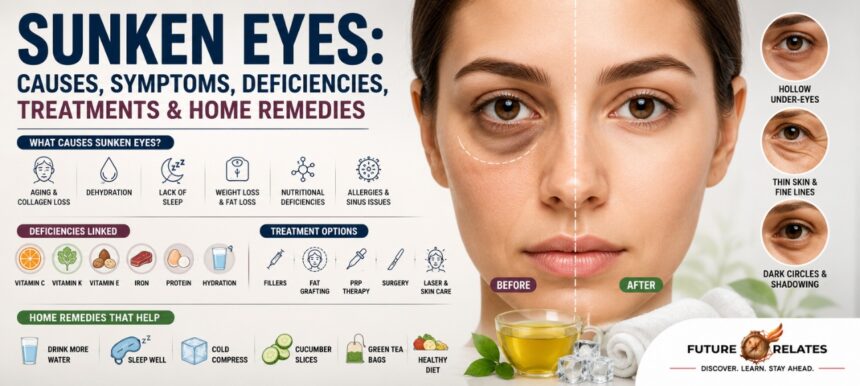
Sunken eyes describe that hollow, deep-set, shadowed appearance in the area under and around your eyes. The skin looks thin, the eye sockets seem more prominent, and the whole face can read as tired or aged. It can show up on one eye or both.
Below is a quick snapshot before we get into the details.
|
Aspect |
Quick Summary |
|---|---|
|
Common name |
Sunken eyes, hollow eyes |
|
Medical term |
Enophthalmos |
|
Related terms |
Tear trough hollows, under-eye hollows |
|
Top causes |
Aging, dehydration, poor sleep, weight loss |
|
Deficiencies linked |
Vitamin C, K, E, iron, protein |
|
Home remedies |
Hydration, sleep, cold compress, diet |
|
Medical options |
Fillers, fat grafting, PRP, surgery |
|
See a doctor if |
Sudden, one-sided, or with other symptoms |
Sunken eyes meaning
In simple terms, sunken eyes happen when the area beneath your eyes loses volume or the eyeball sits deeper in its socket. The result? A hollowed-out, shadowy look that can make you appear older or worn out.
Sunken eyes vs under-eye hollows
People mix these up all the time. Under-eye hollows usually point to that specific groove below the lower eyelid, often called tear trough hollows. Sunken eyes is the broader term covering the whole recessed, deep-set appearance.
Are sunken eyes the same as enophthalmos?
Not exactly. Enophthalmos is the medical word for when the eyeball itself sinks backward into the orbital socket, often due to trauma, fat loss, or structural changes. Sunken eyes can include enophthalmos, but it also covers gentler cosmetic hollowing.
What Do Sunken Eyes Look Like?
You’ll usually spot sunken eyes pretty quickly, even in a casual selfie.
Common visual signs
Think thin, delicate under-eye skin, a hollow curve where there used to be fullness, and eye sockets that appear more pronounced. The upper eyelid hollow (or superior sulcus) may deepen too.
Dark circles, hollowness and shadowing
What’s interesting is how shadows play a role. When the under-eye area sinks, light hits it differently, creating dark shadows and dark circles even if your skin tone is perfectly even. It’s partly a trick of the light!
When sunken eyes look tired or aged
Combine hollowness with fine lines and a bit of dullness, and suddenly you’ve got that gaunt, fatigued face. Honestly, it’s one of the biggest reasons people start searching for solutions.
What Causes Sunken Eyes?
There’s rarely just one culprit. Let’s break down the usual suspects.
Aging and collagen loss
As we move through our late 30s and early 40s, collagen and elastin naturally decline. This means skin laxity, volume depletion, and fat atrophy around the eyes. It’s the most common reason sunken eyes appear over time.
Genetics and facial structure
Some folks are simply born with deep-set eyes or a bone structure that shows hollowing early. If your parents have it, you may too.
Dehydration
Can dehydration cause sunken eyes? Absolutely. When your body lacks water, the delicate periorbital area loses plumpness fast, making hollows more obvious.
Lack of sleep and fatigue
Poor sleep slows circulation and can worsen shadows and hollowness. It won’t create deep enophthalmos overnight, but it definitely accentuates a tired, sunken look.
Sudden weight loss and fat loss
Dramatic weight loss strips facial fat, including the orbital fat that cushions your eyes. That’s why rapid dieting often leaves the face looking gaunt.
Stress and unhealthy lifestyle habits
Chronic stress, too much caffeine, and alcohol all chip away at skin health and hydration, aggravating hollowness.
Smoking and sun exposure
Smoking accelerates collagen loss, while UV damage breaks down elastin. Both speed up under-eye aging.
Allergies and sinus infections
Allergic rhinitis and sinusitis can trigger allergic shiners (darkening under the eyes). Silent sinus syndrome may even shift the orbital floor, causing genuine sunken eyes.
Trauma and orbital fractures
A blow to the face or an orbital fracture can push the eyeball backward, leading to enophthalmos and facial asymmetry.
Glaucoma drops and medication-related causes
Certain glaucoma drops (prostaglandin analogues) are linked to periorbital fat loss, a condition called prostaglandin-associated periorbitopathy. Worth mentioning to your eye doctor if you notice changes.
What Deficiency Causes Sunken Eyes?
Nutrition plays a bigger role than most people realize.
Vitamin C deficiency
Vitamin C fuels collagen production. Low levels (you need around 75 to 90 mg daily) can weaken skin structure around the eyes.
Vitamin K deficiency
Vitamin K helps with blood vessels and reducing discoloration. Aim for roughly 90 to 120 mcg per day.
Vitamin E deficiency
Around 15 mg of vitamin E daily supports the skin barrier and helps protect delicate tissue.
Iron deficiency and anemia
Low iron (8 to 18 mg depending on age and sex) often causes pale, shadowed under-eyes and a tired appearance. Anemia is a frequent hidden reason.
Protein deficiency and malnutrition
Not enough protein means less support for skin and facial fat, contributing to hollowing.
Poor nutrition and dehydration
Put simply, a diet low in nutrients plus not enough water is a recipe for sunken eyes.
Symptoms Associated With Sunken Eyes
Hollow appearance
The signature sign: a recessed, hollowed-out curve beneath the eyes.
Dark circles and thin skin
Thin, discolored skin lets underlying blood vessels show through, deepening dark circles.
Droopy eyelids and eye irritation
In some cases you’ll notice ptosis (eyelid drooping), dryness, redness, or general eye discomfort.
Facial asymmetry and deeper eye sockets
When one side sinks more than the other, facial imbalance and prominent eye sockets become visible.
Sunken Eyes vs Eye Bags: How to Tell the Difference
This confuses a lot of people, so let’s clear it up.
Hollow vs puffy under-eyes
Sunken eyes look hollow and shadowed. Eye bags look puffy and swollen. They’re basically opposites!
Causes are different
Bags often come from fluid retention, fat pushing forward, or allergies. Sunken eyes come from volume loss.
Why treatment should match the problem
Here’s why it matters: filler adds volume for hollows, but that’s the wrong move for puffiness. Matching the treatment to the actual issue saves you money and frustration.
Can Sunken Eyes Be a Sign of an Underlying Health Problem?
When sunken eyes are harmless
Most of the time, sunken eyes are cosmetic or age-related. Totally harmless.
When they may indicate illness or deficiency
Sometimes they signal dehydration, anemia, thyroid disorders, or nutrient gaps. Sudden or one-sided hollowing can point to sinus issues or trauma.
When to see a doctor immediately
Are sunken eyes dangerous? Rarely, but see a doctor promptly if they appear suddenly, affect just one eye, or come with vision changes, pain, or unexplained weight loss. A quick check (blood tests, sometimes a CT or MRI) rules out anything serious.
How to Get Rid of Sunken Eyes Naturally
Good news! Plenty of home remedies can help soften the look.
Hydration and sleep
Start here. Drink 6 to 8 glasses of water daily and aim for 7 to 9 hours of sleep on a consistent schedule. This alone makes a noticeable difference.
Cold compress, cucumber and tea bags
Try a 10 to 15 minute cold compress. Two chilled cucumber slices or two cool green tea bags can reduce shadows and refresh the area beautifully.
Eye creams and moisturisers
Look for retinol, peptides, caffeine, niacinamide, and hyaluronic acid. These hydrate, firm, and brighten the under-eye contour over time.
Diet changes that may help
Load up on leafy greens, citrus fruits, berries, nuts, and fish. A vitamin-rich diet supports collagen and skin elasticity.
Stress reduction and smoking cessation
Managing stress, quitting smoking, and cutting back on caffeine and alcohol all help your skin bounce back.
Medical Treatments for Sunken Eyes
When home remedies aren’t enough, these options step in.
Dermal fillers
Hyaluronic acid tear trough fillers are the go-to for under-eye hollows. Results typically last 12 to 18 months, and it’s a quick in-office treatment.
Fat grafting
Fat transfer moves about 1 mL of your own fat under each eye for a natural, longer-lasting fix.
Laser and skin rejuvenation treatments
Laser treatment, radiofrequency microneedling, and chemical peels improve texture, tone, and firmness.
PRP and polynucleotides
Platelet-rich plasma (PRP) and polynucleotides stimulate collagen, often over 1 to 2 treatment sessions.
Blepharoplasty and surgical options
For structural issues, blepharoplasty (eyelid surgery), orbital reconstruction, or an infraorbital rim implant may be recommended.
Treatment for allergy, sinus or trauma-related cases
If allergies or sinusitis are behind it, antihistamines, nasal sprays, or endoscopic sinus surgery can help. Trauma cases may need reconstructive surgery.
How to Prevent Sunken Eyes
Protect collagen and skin elasticity
Use retinoids and antioxidants, and treat your under-eye skin gently.
Maintain hydration and nutrition
Stay hydrated and eat balanced, nutrient-dense meals. Your skin will thank you!
Protect the under-eye area from UV damage
Wear SPF 50 sunscreen, sunglasses, and a hat. UV protection is one of the smartest anti-aging habits.
Build healthy sleep habits
Consistent 7 to 9 hours of sleep keeps that fresh, rested look going.
Best Foods and Nutrients for Sunken Eyes
Vitamin-rich foods
Citrus fruits, broccoli, and leafy greens deliver vitamins C, K, and E.
Iron-rich foods
Spinach, lentils, red meat, and beans fight iron deficiency and pale under-eyes.
Protein and healthy fats
Fish, eggs, nuts, and fish oil support skin structure and healthy fats.
Antioxidant-rich foods for skin support
Berries, green tea, and colorful veggies pack flavonoids and antioxidants that protect skin.
FAQs About Sunken Eyes
Can lack of sleep cause sunken eyes?
Yes. Poor sleep worsens shadows and hollowness, though it usually accentuates rather than fully creates them.
Can dehydration cause sunken eyes?
Definitely. Low water intake reduces plumpness and makes hollows more obvious, often quickly.
Are sunken eyes permanent?
Not always. Dehydration and sleep-related cases are reversible. Age or trauma-related hollowing may need treatment.
Can fillers fix sunken eyes?
Yes, tear trough fillers restore volume beautifully, with results lasting 12 to 18 months and recovery in just 1 to 2 days.
What deficiency causes sunken eyes?
Vitamin C, K, and E, plus iron and protein deficiencies are the main ones linked to sunken eyes.
How long does it take to improve sunken eyes naturally?
With better hydration, sleep, and diet, you may see gradual improvement within a few weeks. Structural hollowing takes longer.
Final Thoughts on Sunken Eyes
Understanding the cause is key
The real secret to fixing sunken eyes is figuring out why they’re there. Dehydration, deficiency, aging, and trauma all call for different approaches.
Choosing the right treatment or remedy
Start simple: water, sleep, a good diet, and sun protection. If hollows stick around, treatments like fillers or fat grafting can help. And if anything appears suddenly or feels off, check in with a doctor. Your eyes deserve that little bit of care.
For More Information Visit: https://futurerelates.co.uk/