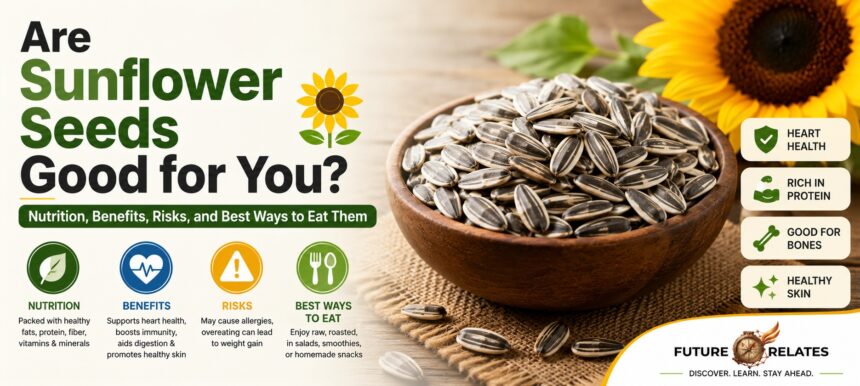

A complete guide to sunflower seed nutrition, health benefits, possible side effects, and smart ways to include them in your daily diet.
- What Are Sunflower Seeds?
- Sunflower Seeds Nutrition Facts
- Why Sunflower Seeds Are Considered Nutrient-Dense
- Top Health Benefits of Sunflower Seeds
- Do Sunflower Seeds Help Heart Health?
- Can Sunflower Seeds Help With Blood Sugar and Diabetes?
- Are Sunflower Seeds Good for Immune Health?
- Sunflower Seeds and Thyroid Health
- Sunflower Seeds for Weight Management and Satiety
- Pumpkin Seeds vs Sunflower Seeds: Which Is Better?
- How to Eat Sunflower Seeds
- Best Sunflower Seed Recipes and Food Pairings
- Possible Risks and Side Effects of Sunflower Seeds
- Can You Eat Sunflower Seeds Every Day?
- How to Store Sunflower Seeds Properly
- Final Verdict: Are Sunflower Seeds Healthy?
- FAQs
Short answer? Yes! Sunflower seeds are genuinely good for you. They’re packed with vitamin E, selenium, magnesium, healthy fats, protein, and fiber, and they make a wonderfully crunchy, snackable addition to almost any meal. But like anything, the details matter, so let’s walk through everything you actually need to know.
What Are Sunflower Seeds?
Here’s the thing, these little seeds punch way above their weight. Let’s break down what they really are before we talk about why they’re so beloved.
|
Quick Facts |
Details |
|---|---|
|
Plant source |
Helianthus annuus (the common sunflower) |
|
Edible part |
The kernel (seed heart) inside the shell |
|
Per 1 oz (28g) |
~165 calories, 5.5g protein, 3g fiber, 14g fat |
|
Standout nutrients |
Vitamin E, selenium, magnesium, copper |
|
Common forms |
Raw, roasted, salted, unsalted, sunflower butter |
|
One flower head |
Can hold up to 2,000 seeds! |
What plant do sunflower seeds come from?
They come from the towering, cheerful sunflower plant, Helianthus annuus. A single flower head can stretch about 12 inches (30.5 cm) across and produce up to 2,000 seeds. Global production tops 54 million tonnes a year, with Russia and Ukraine leading the pack.
Sunflower kernels vs shells
The kernel is the soft, edible inner part, sometimes called the sunflower heart. The shell (or hull) is the hard outer casing. You crack the shell, eat the kernel, and spit out the rest. Simple!
Hulled vs unhulled sunflower seeds
Hulled sunflower seeds have the shell removed, so they’re ready to toss into recipes. Unhulled seeds still wear their striped or black shells, which is why they’re a favorite for snacking straight from the bag.
Types of sunflower seeds: linoleic, high oleic, and oilseed varieties
There are a few kinds worth knowing. Linoleic seeds are the everyday variety. High oleic seeds carry more heart-friendly monounsaturated fat. Black oil sunflower seeds are mostly pressed for sunflower oil (and yes, birdseed too), while confectionery seeds are the striped ones we love to eat.
Sunflower Seeds Nutrition Facts
To be honest, the nutrition profile is where sunflower seeds really shine.
Calories in sunflower seeds
A 1-ounce (28g) serving brings about 165 calories. A quarter cup lands around 207 calories, and a full 100 grams packs a hefty 584 kcal. Small seeds, big energy!
Protein, fiber, and carbohydrate content
That same ounce delivers roughly 5.5g protein, 3g fiber, and 6.8g carbohydrates. Bump it up to 100 grams and you’re looking at about 20.78g protein and 8.6g fiber. Not bad for a snack you can hold in one hand.
Healthy fats in sunflower seeds
Most of the calories come from healthy fats, mainly polyunsaturated and monounsaturated. About 14g of fat sits in every ounce, rich in linoleic acid, with very little saturated fat.
Vitamin and mineral profile
This is the fun part. One ounce gives you around 49% of your daily vitamin E, 41% selenium, 9% magnesium, 58% copper, 26% manganese, and 14% zinc, plus B vitamins like niacin, folate, thiamine, and vitamin B6. That’s a serious micronutrient haul!
Why Sunflower Seeds Are Considered Nutrient-Dense
Antioxidants and plant compounds
Sunflower seeds are loaded with antioxidants, phenolic acids, flavonoids, and phytosterols. These bioactive compounds help fight free radicals and reduce oxidative stress in your cells.
Vitamin E and selenium benefits
Vitamin E is a powerhouse antioxidant that protects your cells, while selenium supports immunity and thyroid function. Together, they’re a dream team for cell protection.
Magnesium, copper, and phosphorus content
Magnesium helps with muscle cramps, bone health, and blood pressure. Copper supports energy and connective tissue, and phosphorus keeps your bones strong. What’s interesting is how much of these minerals fit into such a tiny seed.
Top Health Benefits of Sunflower Seeds
Heart health support
The healthy fats, magnesium, and phytosterols work together to support your heart. Some studies link regular seed intake to a 15% lower risk of heart disease events.
Immune system support
Zinc and selenium are both immune heroes, helping your body defend itself and repair cells.
Anti-inflammatory properties
Eating seeds five times a week has been tied to about 32% lower C-reactive protein, a key marker of inflammation.
Blood sugar and diabetes support
Thanks to fiber and chlorogenic acid, sunflower seeds may help steady blood sugar. Research points to roughly a 10% reduction in fasting blood sugar with regular intake.
Thyroid health support
Selenium is essential for thyroid function, and sunflower seeds are one of the tastier ways to get it.
Do Sunflower Seeds Help Heart Health?
LDL cholesterol and triglycerides
Studies suggest sunflower seeds may lower LDL cholesterol by around 9% and triglycerides by about 12%. That’s meaningful support for your arteries.
Blood pressure support
The magnesium content helps relax blood vessels, and some research shows a 5% drop in systolic blood pressure with steady seed consumption.
Healthy fats and phytosterols
Phytosterols compete with cholesterol for absorption, helping keep your levels in check. The unsaturated fats add cardioprotective value too.
Inflammation and cardiovascular wellness
Less inflammation means happier arteries. One study even linked regular seed eaters to a 21% lower risk of dying from heart disease.
Can Sunflower Seeds Help With Blood Sugar and Diabetes?
Fiber and glucose response
Fiber slows digestion, which softens blood sugar spikes after meals. That’s a win for anyone watching their glucose.
Chlorogenic acid and metabolic health
Chlorogenic acid, a plant compound in sunflower seeds, may improve how your body handles sugar and support metabolic balance.
Sunflower seeds and insulin resistance
By pairing protein, healthy fats, and fiber, sunflower seeds can help ease insulin resistance, especially when they replace refined snacks.
Are Sunflower Seeds Good for Immune Health?
Zinc and selenium for immunity
Both minerals are crucial for a strong immune response. Zinc helps your cells fight off invaders, and selenium keeps your defenses sharp.
Antioxidants and cell protection
Vitamin E and phenolic compounds shield your cells from oxidative damage, keeping your immune system running smoothly.
Anti-inflammatory effects
Chronic inflammation wears the body down. The anti-inflammatory nutrients in sunflower seeds help calm that fire.
Sunflower Seeds and Thyroid Health
Why selenium matters
Your thyroid needs selenium to make and regulate hormones. A shortfall can throw the whole system off.
Thyroid-supportive nutrients
Beyond selenium, the zinc and antioxidants in sunflower seeds also lend a hand to thyroid function.
Sunflower seeds in a balanced diet
A small daily handful can help fill selenium gaps, but variety in your diet still matters most.
Sunflower Seeds for Weight Management and Satiety
Protein, fiber, and fullness
Protein and fiber together keep you feeling full longer, which can curb mindless snacking.
Portion size matters
Here’s the catch, they’re calorie-dense. A quarter cup adds up fast, so keep portions reasonable.
Calorie density and mindful eating
Measuring out a serving instead of eating from the bag makes a real difference for weight management.
Pumpkin Seeds vs Sunflower Seeds: Which Is Better?
Which has more fiber?
They’re close, though sunflower seeds edge ahead in some servings.
Which has more protein?
Pumpkin seeds usually carry slightly more protein per serving.
Which has more magnesium?
Pumpkin seeds tend to win on magnesium, but sunflower seeds shine for vitamin E and selenium.
When sunflower seeds are the better choice
If you want more vitamin E, a milder nutty flavor, and a budget-friendly snack, sunflower seeds are your pick.
How to Eat Sunflower Seeds
Raw vs roasted sunflower seeds
Raw seeds keep the most nutrients, while roasted sunflower seeds offer a deeper, toastier crunch. Both are great, just roast gently to protect the healthy fats.
Salted vs unsalted
Unsalted keeps your sodium low. Salted are tasty but sneak in about 70mg sodium per ounce, so watch the amount.
Best ways to add sunflower seeds to meals
Sprinkle them on salads, stir them into oatmeal, or toss them into trail mix for an easy nutrient boost.
Recipe and snack ideas
Blend them into smoothies, fold them into veggie burgers, or enjoy a spoonful of sunflower butter on toast.
Best Sunflower Seed Recipes and Food Pairings
Salads, yogurt, and oatmeal
A crunchy topping over yogurt or a leafy salad instantly upgrades texture and nutrition.
Smoothies, soups, and grain bowls
Blend into smoothies or scatter over grain bowls and soups for a nutty finish.
Bread, muffins, and granola bars
They bake beautifully into breads, muffins, and homemade granola bars.
Sunflower seed butter ideas
Sunflower butter is a fantastic peanut-free spread, wonderful on avocado toast or swirled into oatmeal.
Possible Risks and Side Effects of Sunflower Seeds
Sodium and calorie concerns
Salted varieties add up on sodium, and the calorie density means overeating is easy.
Cadmium exposure
Sunflower seeds can absorb cadmium from soil. Sticking to around 255 grams per week keeps exposure within safe limits.
Allergy risk
Though uncommon, sunflower seed allergies do happen, sometimes linked to mugwort pollen cross-reactivity.
Sprouted seed safety
Sprouted seeds carry a small risk of bacterial contamination like Salmonella, so buy from trusted sources.
Shells and digestive blockage
Swallowing lots of shells can cause digestive discomfort or, in rare cases, intestinal blockage. Eat the kernel, skip the shell.
Can You Eat Sunflower Seeds Every Day?
Daily serving size guidance
A daily ounce (about 28g) is a smart, satisfying amount for most people.
Who should moderate intake
Anyone watching sodium, calories, or with a known seed allergy should keep portions modest.
How to include them safely
Choose unsalted, shelled seeds, mix them into varied meals, and stay within weekly limits.
How to Store Sunflower Seeds Properly
Preventing rancidity
Their healthy fats can go rancid if left in heat or light, so store them cool and dark.
Airtight storage tips
An airtight container is your best friend for keeping them fresh and crunchy.
Fridge vs pantry storage
The pantry works for short-term use, but the fridge or freezer extends freshness for months.
Final Verdict: Are Sunflower Seeds Healthy?
Who benefits most
Anyone wanting more heart-friendly fats, immune-supporting minerals, and a wholesome snack will love them.
Best way to eat them
Go for raw or lightly roasted, unsalted, shelled sunflower seeds in sensible portions.
Key takeaways for healthy living
Sunflower seeds are nutrient-dense, versatile, and genuinely good for you. Enjoy a daily handful and let these tiny seeds do big things for your health!
FAQs
Are sunflower seeds good for you?
Yes! They’re rich in vitamin E, selenium, magnesium, protein, and healthy fats that support overall health.
What are the health benefits of sunflower seeds?
They support heart health, immunity, blood sugar control, thyroid function, and help fight inflammation.
Are sunflower seeds high in protein?
They offer a solid ~5.5g protein per ounce, making them a good plant-based protein snack.
Are sunflower seeds high in fiber?
Yes, around 3g of fiber per ounce, which supports digestion and fullness.
Do sunflower seeds help lower cholesterol?
Their phytosterols and healthy fats may lower LDL cholesterol by roughly 9%.
Can sunflower seeds help with diabetes?
The fiber and chlorogenic acid may help steady blood sugar, with studies showing about a 10% drop in fasting glucose.
Are sunflower seeds good for heart health?
Absolutely, they support healthy blood pressure, cholesterol, and reduced inflammation.
Are sunflower seeds good for the immune system?
Yes, thanks to zinc, selenium, and antioxidants that protect and strengthen your defenses.
Can sunflower seeds support thyroid health?
The selenium content plays a key role in healthy thyroid function.
How many sunflower seeds should you eat a day?
About 1 ounce (28g) daily is a healthy, satisfying serving for most people.
Is it safe to eat sunflower seeds every day?
Yes, in moderation. Keep intake under roughly 255 grams per week to limit cadmium exposure.
Are roasted sunflower seeds healthy?
Yes, especially lightly roasted and unsalted versions that protect the healthy fats.
What is the difference between hulled and unhulled sunflower seeds?
Hulled seeds have the shell removed; unhulled seeds still have their shells on.
Can you eat sunflower seed shells?
It’s best not to. Shells can cause digestive discomfort or, rarely, intestinal blockage.
Pumpkin seeds vs sunflower seeds: which is healthier?
Both are great! Pumpkin seeds lead in magnesium and protein, while sunflower seeds win on vitamin E and selenium.
For More Information Visit: https://futurerelates.co.uk/