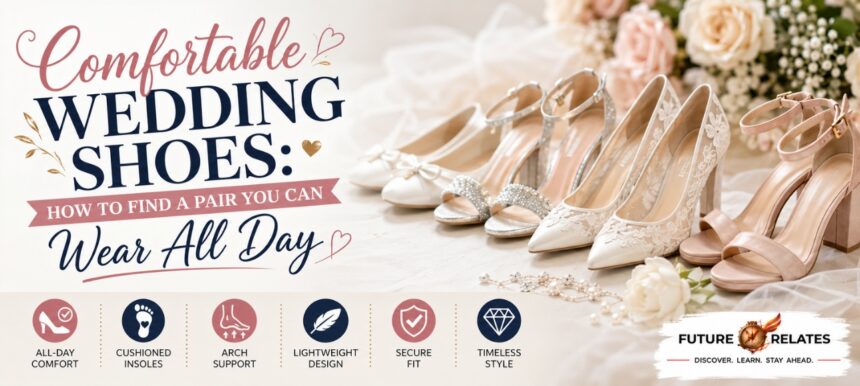

Here’s the thing about your wedding day: you’re on your feet way longer than you’d ever expect. Standing for photos, walking down the aisle, greeting guests, and dancing until midnight can add up to 10 to 14 hours in the same pair of shoes. That’s a full workday and then some!
- Why Comfortable Wedding Shoes Matter More Than You Think
- What Makes a Wedding Shoe Truly Comfortable
- The Most Comfortable Heel Types for Brides
- Best Comfortable Wedding Shoes by Style
- How to Choose Wedding Shoes Based on Your Venue
- How to Choose the Right Heel Height for Your Comfort Level
- Fit Tips for Finding Comfortable Bridal Shoes
- How to Break In Wedding Shoes Before the Big Day
- Should You Bring a Second Pair of Wedding Shoes
- Common Mistakes Brides Make When Buying Wedding Shoes
- Stylish Features to Look for in Comfortable Wedding Shoes
- How to Find Comfortable Wedding Shoes That Still Feel Like You
- Final Thoughts on Finding the Most Comfortable Wedding Shoes
- FAQs About Comfortable Wedding Shoes
And somewhere along the way, someone convinced us that beautiful shoes have to hurt. To be honest, that’s a myth. Comfortable wedding shoes aren’t a compromise on style. Comfort is a construction choice, built into the padding, the heel, and the fit. Get those right, and you get shoes that look stunning and let you enjoy every single moment. This guide will help you find that perfect pair.
Why Comfortable Wedding Shoes Matter More Than You Think
A wedding day is longer than most brides expect
Most brides plan for the ceremony but forget the reception marathon. From first look to last dance, you could be upright for 12+ hours. Your feet swell, your arches ache, and by dessert you’re eyeing the exit. Comfortable wedding shoes keep you in the moment instead of counting down the minutes.
What uncomfortable shoes can ruin on your big day
Blisters, sore feet, and wobbly ankles show up in your posture, your photos, and your mood. Nobody wants to remember their reception as the night their feet gave out.
Why comfort and elegance should go together
Comfort isn’t the opposite of glamorous. It’s part of it. When your feet feel great, you stand taller, dance freely, and glow in every picture.
|
Quick Pick |
Best For |
Heel Height |
Venue Match |
|---|---|---|---|
|
Block heels |
Stability + support |
1.5–3 inches |
Garden, outdoor, grass |
|
Kitten/low heels |
All-day wear |
0.5–2 inches |
Indoor, formal |
|
Platforms |
Height, less strain |
3–4 inches |
Hardwood, tile |
|
Flats & Mary Janes |
Maximum ease |
0 inch |
Any venue |
|
Wedges & espadrilles |
Beach & lawn |
1–3 inches |
Sand, grass |
|
Sneakers |
Reception dancing |
Flat |
Dance floor |
What Makes a Wedding Shoe Truly Comfortable
Cushioned insoles and memory foam padding
The magic starts underfoot. A plush, memory foam footbed or latex padding absorbs shock with every step. Even a 5-millimeter foam layer makes hours of standing feel softer and kinder.
Arch support and pressure distribution
Good arch support spreads your weight evenly instead of dumping it all on the ball of your foot. That’s the secret to blister-free, pain-free hours on your feet.
Breathable materials like leather, satin, and mesh
Soft leather, breathable lining, and illusion mesh let your feet breathe. That matters a lot in hot weather, when swelling and sweat can turn stiff satin pumps into a nightmare.
A secure fit with ankle straps, slingbacks, or elastic
Adjustable straps keep your foot locked in place. Ankle straps, slingback straps, and elastic panels stop that annoying slip-and-slide that leads to rubbing.
Why a roomy toe box matters
A narrow toe box squeezes your toes all night. A roomy, rounded one gives them space to relax, even as your feet swell later in the evening.
The Most Comfortable Heel Types for Brides
Block heel wedding shoes for stability and support
Block heels are the gold standard for comfortable wedding shoes. That wide, stable base spreads your weight and won’t sink into grass. Perfect for outdoor and garden weddings!
Low heels and kitten heels for all-day wear
A little lift, big comfort. Kitten heels around 1 to 2 inches give you elegance with far less strain on your arches.
Platform wedding shoes for height without extra strain
Platforms are a clever trick. A matching sole under the front reduces the steep pitch, so a 4-inch heel feels more like 2. You get the height without the pain.
When stilettos can still work
Love a stiletto? Go for it, but only if you already wear heels confidently. Pick a lower pinpoint heel, add a padded insole, and break them in early.
Best Comfortable Wedding Shoes by Style
Comfortable wedding flats
Ballet flats and pointed-toe flats are the easiest all-day choice. Look for a cushioned footbed and soft leather lining, and you’ll float down the aisle.
Comfortable slingback wedding shoes
Slingbacks give you a secure fit with an open, breezy back. The adjustable strap keeps your heel snug while feeling light.
Comfortable bridal sandals
Strappy sandals with a padded footbed are made for warm-weather and beach weddings. Ankle-strap sandals add extra security on uneven ground.
Comfortable Mary Janes and pumps
Mary Janes bring that sweet, vintage-inspired charm with a strap that holds your foot beautifully. Round-toe pumps with padding work for classic brides.
Comfortable bridal sneakers for the reception
Yes, bridal sneakers! Slip into a clean white or pearl-detailed pair for dancing. They’re the ultimate second-look shoes for a late-night dance floor.
How to Choose Wedding Shoes Based on Your Venue
Best wedding shoes for beach weddings
Sand swallows heels whole. Choose flats, wedges, or espadrilles that stay steady on soft ground.
Best wedding shoes for garden and outdoor weddings
Grass, gravel, and patio slats call for block heels, wedges, or flats. Avoid thin heels that sink or wobble.
Best wedding shoes for indoor or formal venues
Smooth hardwood, tile, and carpet give you freedom. Pumps, slingbacks, and kitten heels shine here.
Best wedding shoes for destination weddings in hot weather
Hot climates mean swelling feet. Go breathable, lightweight, and open-toe, with a secure strap for cobblestones and uneven terrain.
How to Choose the Right Heel Height for Your Comfort Level
If you rarely wear heels
Stick to flats or a low 1 to 1.5 inch heel. Your wedding day is not the time to test a brand-new balancing act.
If you want extra height without sacrificing comfort
Reach for a block heel or platform around 2.5 to 3 inches. You’ll feel tall and steady.
If you plan to dance all night
Keep it low, or plan a switch. Flats or sneakers for the reception will save your feet.
Fit Tips for Finding Comfortable Bridal Shoes
Try wedding shoes on later in the day
Your feet are largest in the afternoon and evening. Try shoes then for the most accurate fit.
Consider wide fit, narrow fit, and half sizes
If your feet are wide, choose a wide fit or size up. Half sizes can be the difference between magic and misery.
Bring your shoes to every dress fitting
Wear them to fittings so your hem lands right and your posture feels natural.
Match your shoes to your hem length and posture
Heel height changes your dress length. Lock in your shoes early so tailoring is spot-on.
How to Break In Wedding Shoes Before the Big Day
When to start breaking them in
Start 2 to 3 weeks out. Never debut wedding shoes for the first time on the big day!
How long to wear them each day
Short sessions work best, around 15 to 30 minutes daily around the house.
Why wearing them indoors first matters
Indoor wear keeps soles clean and lets materials soften without scuffs.
What to do if your shoes still feel stiff
Wear thick socks with them to gently stretch tight spots. A cobbler can help too.
Should You Bring a Second Pair of Wedding Shoes
Why backup shoes are a smart idea
A second pair reduces risk. If your feet swell or ache, you’ve got a rescue plan.
Best second-look shoes for dancing
Cushioned flats or embellished sneakers keep you on the dance floor longer.
Flats vs sneakers for the reception
Flats feel more bridal; sneakers give more bounce. Both beat sore feet every time.
Common Mistakes Brides Make When Buying Wedding Shoes
Choosing style over comfort
Sky-high stilettos look great in photos and feel awful by hour three. Balance both.
Buying shoes too late
Rushing means no break-in time. Shop early.
Ignoring the venue surface
Grass, sand, and cobbles all demand different soles. Match your shoe to the ground.
Wearing brand-new shoes on the wedding day
Unbroken-in shoes are a blister factory. Always test them first.
Picking heels that are too high for your normal routine
If you never wear 4-inch heels, your wedding is not the day to start.
Stylish Features to Look for in Comfortable Wedding Shoes
Pearls, bows, and crystal embellishments
Pearl details, silk bows, and rhinestones add sparkle without adding pain.
Lace, satin, and mesh finishes
Alencon lace, soft satin, and illusion mesh bring romance and breathability together.
Ivory, white, metallic, blush, and something blue options
Choose ivory or white for classic, metallic for modern, blush for soft romance, or a hidden blue sole for your something blue!
How to Find Comfortable Wedding Shoes That Still Feel Like You
For classic brides
Timeless ivory satin pumps or Mary Janes with a low, supportive heel.
For modern brides
Sleek metallic block heels or minimalist white sneakers.
For romantic brides
Lace-covered flats or bow-adorned slingbacks in soft blush.
For minimalist brides
Clean, understated leather sandals or plain square-toe flats.
Final Thoughts on Finding the Most Comfortable Wedding Shoes
What’s interesting is how simple it really is once you know what to look for. Prioritize fit, padding, the right heel type, your venue, and enough break-in time. Nail those five, and you’ll have comfortable wedding shoes that carry you from first look to last dance. The best pair isn’t just pretty. It’s the one that lets you enjoy every single moment of your day!
FAQs About Comfortable Wedding Shoes
What are the most comfortable wedding shoes for brides?
The most comfortable options have cushioned insoles, arch support, a roomy toe box, and a stable heel. Block heels, low heels, and padded flats top the list.
Are block heels better than stilettos for a wedding?
Yes, for most brides. Block heels offer a wider, stable base that supports your weight and won’t sink into grass, making them far comfier for all-day wear.
Can wedding heels be comfortable enough for all-day wear?
Absolutely. Choose a heel under 3 inches with memory foam padding and arch support, and break them in early. Comfort is built into the construction.
How far in advance should I break in my wedding shoes?
Start 2 to 3 weeks before the wedding. Wear them indoors for 15 to 30 minutes a day so they mold to your feet.
What wedding shoes are best for outdoor ceremonies?
Block heels, wedges, and flats work best on grass and gravel. They stay steady and won’t sink into soft ground.
Are flats a good option for brides?
Definitely. Flats and Mary Janes offer maximum comfort, especially for beach weddings, long receptions, and brides who don’t wear heels.
How do I stop wedding shoes from causing blisters?
Break them in early, choose soft leather lining, use padded insoles, and make sure the fit is snug but not tight. Gel strips help too.
Should I bring a second pair of shoes to my wedding?
Yes. A backup pair of flats or sneakers gives your feet a break and keeps you dancing into the night.
What heel height is best for a long wedding day?
A heel between 1.5 and 3 inches, especially a block heel, offers height with comfort. If you’ll dance all night, keep it low.
How do I choose wedding shoes for a beach or garden wedding?
For the beach, pick flats, wedges, or espadrilles that won’t sink into sand. For gardens, choose block heels or wedges that stay stable on grass.
For More Information Visit: https://futurerelates.co.uk/