
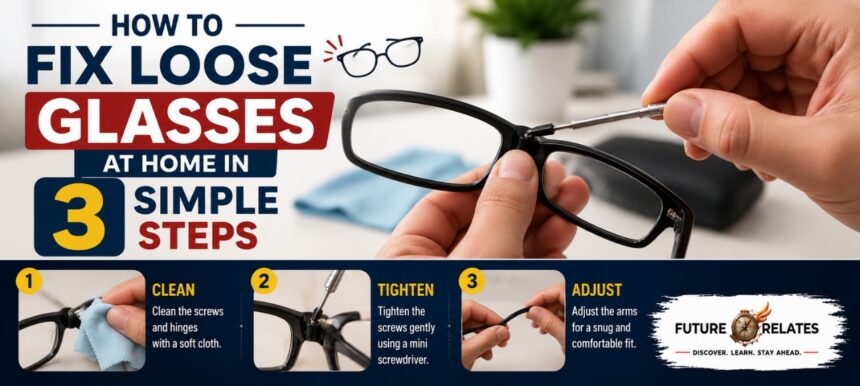

Knowing how to fix loose glasses at home can save you a trip to the optical shop and a bit of frustration too. Glasses loosen over time for a few simple reasons. The tiny screws work themselves free. The temple arms stretch out. And the nose pads shift or lose their grip. The good news? Most of these problems come down to three parts—screws, temple arms, and nose pads—and you can usually sort them out yourself in a few minutes. I’ll walk you through the safe fixes, and I’ll also be honest about when it’s smarter to hand your frames to a professional.
- Why Do Glasses Become Loose Over Time?
- Signs Your Glasses Need Adjustment
- Know the Parts of Your Glasses Before You Start
- Tools You Need to Fix Loose Glasses at Home
- Step 1 – Tighten the Screws
- Step 2 – Adjust the Temple Arms
- Step 3 – Fix the Nose Pads or Bridge
- How to Fix Crooked Glasses
- How to Fix a Loose Hinge on Your Glasses
- Plastic vs Metal Frames: What Changes?
- Temporary Hacks for Loose Glasses
- Common Mistakes to Avoid
- When to Stop DIY and Visit an Optician
- How to Keep Glasses From Getting Loose Again
- FAQs About How to Fixing Loose Glasses
- Final Thoughts
For more useful how-to and repair-related guides, you can also explore FutureRelates.co.uk.
Why Do Glasses Become Loose Over Time?
Here’s the thing—glasses take a beating during daily use. Opening, folding, wiping, and the occasional drop all add up. Below is a quick look at what causes loose glasses and how to spot it.
| Cause | What Happens | Quick Sign |
|---|---|---|
| Everyday wear and tear | Frames flex and hinges wear | Frames feel wobbly |
| Loose or stripped screws | Screws vibrate free over time | Arms swing too easily |
| Heat exposure | Plastic expands and softens | Frames widen or warp |
| One-handed removal | Arms stretch unevenly | Glasses tilt on your face |
Everyday wear and tear
Frames flex a little every time you put them on. Over months, that flexing loosens hinges and joints.
Loose screws and hinge movement
The small hinge screws slowly back out from constant folding. This is the most common cause of loose glasses.
Heat exposure and frame expansion
Leaving glasses on a hot car dashboard can soften plastic frames and widen them.
One-handed removal and poor storage
Yanking glasses off with one hand stretches one arm more than the other, so they sit crooked.
Signs Your Glasses Need Adjustment
Glasses slide down your nose
If you’re pushing them up all day, the fit has loosened.
Frames feel wobbly or uneven
A shaky feel usually points to a loose screw or hinge.
One lens sits higher than the other
Lay them on a flat surface. If one side lifts, the arms are uneven.
Glasses pinch your nose or temples
Red marks or pressure mean the fit needs gentle correction.
Know the Parts of Your Glasses Before You Start
Hinges
The joints where the arms fold. They hold the screws.
Temple arms and temple tips
The long arms that rest over your ears. The tips are the curved ends.
Nose pads and bridge
The small pads on metal frames, or the built-in bridge on plastic ones.
If you want a quick overview of the parts that make up standard eyewear, see Wikipedia’s guide to glasses.
Screws and frame front
Tiny screws sit in each hinge. The frame front holds the lenses.
Tools You Need to Fix Loose Glasses at Home
Eyeglass repair kit
A cheap kit gives you screws, bits, and a mini screwdriver.
Precision screwdriver
A 1.4mm or 1.6mm screwdriver fits most hinge screws.
Warm water or low-heat hair dryer
Both soften plastic frames so you can reshape them.
Soft cloth, mirror, and pliers
A microfiber cloth, a mirror, and padded pliers round out your kit.
Step 1 – Tighten the Screws
Where to find the hinge screws
Look at each hinge where the arm meets the frame. You’ll see a small screw head.
How to turn the screw correctly
Turn clockwise with your precision screwdriver. A quarter turn is usually enough to snug it up.
How tight is too tight?
Stop the moment you feel resistance. Over-tightening strips the thread or cracks the frame.
What to do if the screw is stripped
Swap in a fresh screw from your repair kit. If it won’t hold, an optician can help.
Step 2 – Adjust the Temple Arms
How to tighten metal glasses arms
Metal arms bend with gentle pressure—no heat needed. Curve the tips slightly inward behind the ear.
How to adjust plastic or acetate temple tips
Warm the temple tips for 20–30 seconds with warm water or a low-heat hair dryer, then bend them gently and let them cool.
How to fix glasses that feel loose behind the ears
Create a soft hook shape at the tip so it hugs the back of your ear.
How to test the fit after each adjustment
Put them on after every small change. Make tiny tweaks, not big ones.
Step 3 – Fix the Nose Pads or Bridge
How to adjust metal nose pads
Pinch the pads slightly inward to grip better and stop slipping.
How to improve grip on plastic frames
Clean the bridge to remove oil and sweat, which cause sliding.
Silicone nose pads and other quick fixes
Stick-on silicone nose pads add instant grip and are easy to remove.
How to stop glasses from sliding down your nose
Narrow the pad spacing and keep both frames and face clean and oil-free.
How to Fix Crooked Glasses
Check your glasses on a flat surface
Place them upside down on a table to spot uneven arms.
Adjust uneven temple arms
Gently bend the higher arm down at the hinge to level them.
Fix one lens sitting higher than the other
Correct the arm on the lifted side in small steps.
Correct glasses that tilt on your face
Balance both arms so pressure feels even on each ear.
How to Fix a Loose Hinge on Your Glasses
Remove and inspect the hinge screw
Take out the center screw and check for wear or dust.
Clean the hinge area
Wipe away grime that stops the hinge from closing snugly.
Reinsert or replace the screw
Put the screw back, or use a fresh one if the old is worn.
Test hinge movement safely
The arm should fold smoothly with a little friction—not flop loose.
Plastic vs Metal Frames: What Changes?
Why plastic frames need heat
Plastic and acetate must be warmed before bending, or they crack.
Why metal frames need gentle pressure
Metal reshapes cold with slow, careful pressure.
Fragile materials you should not force
Titanium and memory plastic snap back and resist bending—don’t force them.
Rimless and semi-rimless frame cautions
These are delicate. Adjust them very gently or leave them to a professional.
Temporary Hacks for Loose Glasses
Rubber band washer trick
Wrap a small rubber band around the hinge as a quick spacer.
Adhesive silicone nose pads
Fast, cheap, and great for stopping slippage.
Eyewear wax for extra grip
A dab of eyewear wax on the bridge holds frames steady.
When temporary fixes make sense
Use them when you’re out and can’t reach your tools yet.
Common Mistakes to Avoid
Over-tightening screws
This strips threads and can crack the frame front.
Using boiling water or high heat
Boiling water warps plastic and damages coatings. Warm water only.
Heating the lenses by mistake
Keep heat away from lenses to protect the anti-reflective coating.
Making big adjustments too fast
Small changes, tested often, beat one big bend.
Using the wrong tools
Kitchen tools scratch frames. Stick to the right screwdriver and padded pliers.
When to Stop DIY and Visit an Optician
Stripped screws
If a screw won’t grip, let a pro fit a new one.
Snapped or stuck hinges
Broken hinges need proper repair.
Titanium, memory plastic, and delicate frames
These materials resist home fixes and can snap.
Severe misalignment or ongoing discomfort
Constant slipping or headaches mean a professional fitting is worth it.
How to Keep Glasses From Getting Loose Again
Store them in a hard case
A hardshell case prevents bending and drops.
Remove them with both hands
Two hands keep the arms even.
Check screws regularly
A quick screw check every few weeks catches loosening early.
Keep frames clean and away from heat
Skip hot cars and direct sunlight to protect the shape.
FAQs About How to Fixing Loose Glasses
How do you tighten glasses without a screwdriver?
Use a small coin edge or fingernail on the screw, or try the rubber band washer trick as a stopgap.
Why do my glasses keep slipping down my nose?
Usually loose nose pads, oily skin, or a wide bridge. Clean the frames and pinch the pads inward.
Can I fix loose plastic glasses at home?
Yes. Warm the temple tips gently, reshape them, and let them cool.
How often should I tighten my glasses screws?
Check them every few weeks, or monthly if you wear them daily.
Can tightening glasses damage the frames?
Only if you over-tighten or overheat them. Small, gentle moves keep frames safe.
Final Thoughts
Learning how to fix loose glasses really comes down to three moves—tighten the screws, adjust the temple arms, and fix the nose pads or bridge. Work slowly, make small adjustments, and test the fit after each change. Warm water helps plastic frames, gentle pressure suits metal ones, and simple hacks like silicone pads buy you time. What stands out is how many loose glasses fixes take under five minutes. Just remember to leave titanium, rimless, and pricey frames to an optician—your eyes and your wallet will thank you.
For general information about eyeglasses, frame fit, and proper eyewear care, Cleveland Clinic’s eyeglasses guide is another useful reference.
For More Information Visit: https://futurerelates.