

Introduction
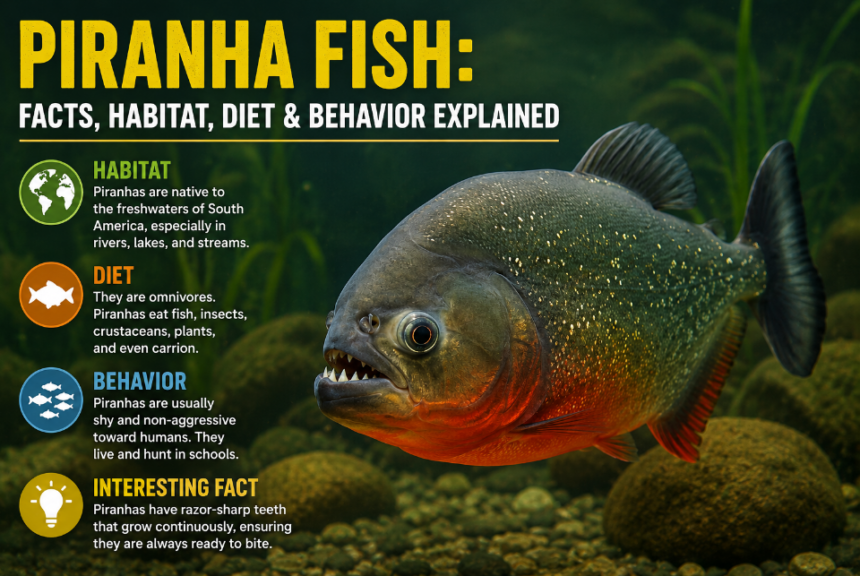
Piranha fish are one of the most famous freshwater fish in the world, often known for their sharp teeth and aggressive reputation. However, much of what people believe about them is exaggerated. In reality, piranhas play an important role in aquatic ecosystems and are not the mindless killers often shown in movies.
In this article, we will explore everything about piranha fish including their habitat, diet, behavior, and common myths. This guide will help you understand the truth behind these fascinating creatures.
What is a Piranha Fish?
Piranhas are freshwater fish mainly found in South America. They belong to the family Serrasalmidae and are closely related to pacu fish. These fish are known for their sharp teeth and strong jaws, which help them feed efficiently in the wild.
Despite their scary image, most piranha species are not dangerous to humans.
Natural Habitat of Piranhas
Piranhas are mostly found in:
- Amazon River Basin
- Orinoco River
- Paraguay River
They prefer warm freshwater environments such as rivers, lakes, and flooded forests. During rainy seasons, they often move into flooded areas where food is more abundant.
Physical Characteristics
Piranhas have a unique body structure that helps them survive:
- Sharp, triangular teeth
- Strong jaw muscles
- Silver, gray, or reddish body (depending on species)
- Compact and muscular shape
Their teeth are designed for cutting and tearing rather than chewing.
What Do Piranhas Eat?
One of the biggest myths is that piranhas only eat meat or attack large animals. In reality, their diet is quite diverse.
They eat:
- Fish
- Insects
- Plants
- Fruits (fallen into water)
- Dead animals (scavenging)
Most piranhas are scavengers, meaning they help clean up dead material in rivers.
Are Piranhas Dangerous to Humans?
Piranhas are often shown as extremely dangerous, but attacks on humans are very rare.
They usually:
- Avoid large animals
- Attack only when threatened or hungry in extreme conditions
- Prefer small prey instead of large targets
In normal situations, piranhas do not see humans as food.
Behavior of Piranhas
Piranhas are known for their group behavior. They often swim in schools for protection against predators.
Key behaviors include:
- Schooling in groups
- Fast feeding response when food is detected
- Territorial behavior during breeding season
- Increased aggression when food is scarce
Their group behavior helps them survive in the wild.
Types of Piranha Fish
There are several species of piranhas, including:
- Red-bellied piranha
- Black piranha
- White piranha
- San Francisco piranha
Each species has different behavior and size.
Common Myths About Piranhas
Many myths surround piranhas, such as:
Myth 1: They eat humans instantly
Reality: Human attacks are extremely rare.
Myth 2: They always attack in groups
Reality: They usually only gather when feeding.
Myth 3: They are always aggressive
Reality: Many species are calm and scavengers.
Role of Piranhas in Ecosystem
Piranhas play an important role in nature:
- Clean up dead animals
- Control fish population
- Maintain ecological balance
Without them, river ecosystems would become unhealthy.
Breeding and Life Cycle
Piranhas reproduce by laying eggs. The male often protects the eggs until they hatch.
- Eggs hatch in a few days
- Baby piranhas are called fry
- They grow quickly in warm waters
Parental care is common in many species.
Conclusion
Piranha fish are misunderstood creatures that are often wrongly portrayed as deadly killers. While they do have sharp teeth and can be aggressive in certain conditions, they are mostly scavengers and play a useful role in their ecosystem. Understanding their true behavior helps remove fear and reveals how important they are in nature.
FAQs
Are piranhas dangerous to humans?
No, piranhas rarely attack humans and are generally not dangerous.
Where do piranhas live?
They live mainly in South American rivers like the Amazon.
What do piranhas eat?
They eat fish, insects, plants, and dead animals.
Do piranhas always hunt in groups?
No, they usually school for protection, not always for hunting.
How big do piranhas grow?
Most piranhas grow between 5 to 14 inches depending on species.