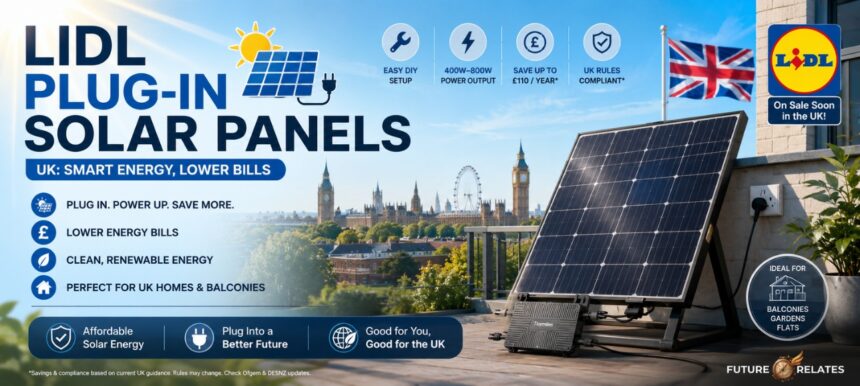

Here’s the thing — the idea of buying solar panels from a supermarket sounds almost too easy, doesn’t it? Yet that’s exactly why Lidl solar panels UK trending searches have exploded lately. People are picturing a compact panel from the middle aisle, a plug that slots into a normal wall socket, and cheaper electricity bills by teatime. Exciting stuff!
- What Are Lidl Plug-In Solar Panels?
- Why Lidl Solar Panels Are Trending in the UK
- Are Lidl Plug-In Solar Panels Legal in the UK?
- How Much Could Lidl Solar Panels Cost?
- How Much Could Lidl Solar Panels Save You?
- Who Are Lidl Solar Panels Best For?
- Who Should Probably Avoid Plug-In Solar Panels?
- Lidl Plug-In Solar Panels vs Rooftop Solar
- What Is the Catch With Lidl Solar Panels?
- Do You Need a Battery With Plug-In Solar Panels?
- What Should You Check Before Buying Lidl Solar Panels?
- When Will Lidl Solar Panels Launch in the UK?
- Final Verdict Are Lidl Solar Panels Worth It?
- FAQ
But excitement and reality don’t always match. So let’s walk through everything calmly — how these kits work, what they might cost, whether they’re even legal yet, and who should actually bother. By the end, you’ll know if the hype is worth your hard-earned cash.
What Are Lidl Plug-In Solar Panels?
Plug-in solar (sometimes called balcony solar) is a small, ready-made kit you set up outdoors and connect straight into your home’s power. No scaffolding, no big installation crew. That simplicity is a huge part of why Lidl solar panels UK trending chatter keeps growing.
|
Feature |
Plug-In Solar (Lidl-style) |
|---|---|
|
Setup |
DIY, plug into a socket |
|
Typical size |
400W–800W |
|
Rough price |
£200–£500 |
|
Best spot |
Balcony, patio, garden wall |
|
Suits |
Renters, flat owners |
How plug-in solar panels work
A panel captures daylight, a small microinverter (often a Hoymiles-style unit) converts it, and the electricity feeds into your home through a socket. It offsets your daytime use, so you draw less from the grid. Simple idea, genuinely clever.
What comes in a Lidl-style solar kit
Expect one or two panels, a microinverter, mounting brackets, and a weatherproof cable. Some kits add a Tronic-branded battery. Always check exactly what’s in the box — completeness changes the value massively.
Plug-in solar vs rooftop solar
Rooftop solar is bigger, pricier and permanent. Plug-in solar is small, portable, and you can take it with you when you move. Different tools for different homes, really.
Why Lidl Solar Panels Are Trending in the UK
What’s interesting is that this trend isn’t just marketing buzz. Several real forces are colliding at once, and that’s fuelling every Lidl solar panels UK trending headline you keep spotting.
|
Driver |
Why It Matters |
|---|---|
|
Rule changes |
UK moving toward approving plug-in kits |
|
High bills |
Households want cheaper power |
|
Big retailers |
Lidl, Amazon, EcoFlow entering the space |
Government rule changes
The Department for Energy Security and Net Zero (DESNZ) has been reviewing how plug-in solar could safely fit UK rules. That policy nudge is a big reason interest jumped.
Rising energy bills and solar demand
Energy prices have stung British households for years. Naturally, anything promising bill relief grabs attention fast.
Why retailers like Lidl and Amazon are involved
Lidl, Amazon and EcoFlow already sell affordable tech. Solar is the logical next step, and a middle-aisle price tag makes it feel achievable.
Are Lidl Plug-In Solar Panels Legal in the UK?
To be honest, this is the trickiest bit. In places like Germany, plug-in solar is already common. The UK is catching up — which is exactly why the Lidl solar panels UK trending buzz feels a bit ahead of the paperwork.
|
Rule |
What It Covers |
|---|---|
|
G98 |
Grid connection notification |
|
BS 7671 |
UK wiring regulations |
|
DNO notification |
Telling your network operator |
Current UK rules on wall-socket solar
Right now, plugging solar into a standard socket sits in a grey area. Approved, UK-certified products are what everyone’s waiting for. Until then, caution matters.
G98 and BS 7671 explained
G98 covers how small systems connect to the grid, including anti-islanding protection that stops back-feeding during outages. BS 7671 is the wiring rulebook. Both exist to keep you safe.
Why certified products matter
A cheap, uncertified kit bought online could clash with your home wiring. UK-approved products with a certified inverter are worth the wait, honestly.
How Much Could Lidl Solar Panels Cost?
|
Kit Type |
Rough Price |
|---|---|
|
Basic panel + inverter |
£200–£300 |
|
Larger 800W setup |
£400–£500 |
|
With battery add-on |
£500+ |
Expected Lidl plug-in solar panel price
Most reporting points to an entry price around £400–£500 for a UK launch. That’s the figure feeding much of the Lidl solar panels UK trending speculation.
Why some reports mention £200, £400 and £500
Germany already sells kits from roughly £200 upward, so cheaper examples exist abroad. UK pricing depends on kit size and whether a battery is included.
What may or may not be included in the box
Watch for missing brackets, short cables, or no battery. A low headline price can hide extra costs.
How Much Could Lidl Solar Panels Save You?
|
Factor |
Typical Figure |
|---|---|
|
Yearly saving |
£70–£110 |
|
Payback time |
4–7 years |
|
Best use |
Daytime electricity |
Typical annual savings estimates
Coverage clusters around £70 to £110 saved per year from a 400W–800W system. Not life-changing, but steady.
Realistic savings vs headline claims
Beware exaggerated “slash your bills” claims. The Energy Saving Trust would tell you real output depends on sunlight, angle and your usage habits.
What affects payback time
South-facing exposure, minimal shade, and using power during daylight all shorten payback. Expect four to seven years in most cases.
Who Are Lidl Solar Panels Best For?
|
Ideal User |
Why |
|---|---|
|
Renters |
No permanent install |
|
Flat owners |
No roof needed |
|
Daytime users |
More self-consumption |
Renters and flat owners
This is the sweet spot! Solar for renters has always been tricky. Plug-in kits change that beautifully.
Homes without suitable roofs
No roof? No problem. A balcony or garden wall works fine.
Households with good daytime energy use
If someone’s home during the day, savings climb. That’s the real win here.
Who Should Probably Avoid Plug-In Solar Panels?
|
Situation |
Concern |
|---|---|
|
Shaded balcony |
Weak output |
|
Old wiring |
Safety risk |
|
Big expectations |
Modest returns |
Shaded balconies and north-facing spaces
Little sun means little power. A north-facing, shaded balcony simply won’t perform.
Homes with wiring concerns
Older fuseboards may not cope well. Get an electrician’s opinion first.
Buyers expecting rooftop-level savings
If you want major bill cuts, this isn’t it. Manage expectations.
Lidl Plug-In Solar Panels vs Rooftop Solar
|
Feature |
Plug-In |
Rooftop |
|---|---|---|
|
Cost |
£200–£500 |
£5,000+ |
|
Output |
400–800W |
3–5kW |
|
Savings |
Modest |
Larger |
Cost comparison
Plug-in wins hugely on upfront cost. Rooftop needs thousands.
Output comparison
Rooftop generates far more. No contest there.
Long-term savings comparison
Rooftop saves more over 15 years, but plug-in gets you started cheaply — which is why Lidl solar panels UK trending interest appeals to first-timers.
What Is the Catch With Lidl Solar Panels?
|
Catch |
Detail |
|---|---|
|
Certification |
Wait for UK-approved kits |
|
Permission |
Landlord/freeholder approval |
|
Value |
Cheap ≠ good |
Safety and certification concerns
Uncertified inverters and weak mounting hardware are genuine risks. Don’t rush.
Planning permission and landlord approval
Renters need landlord permission. Conservation areas may add planning rules too.
Why cheap doesn’t always mean good value
A £200 random online kit might cost more in problems than it saves. Quality matters.
Do You Need a Battery With Plug-In Solar Panels?
|
Question |
Answer |
|---|---|
|
Home in day? |
Battery less vital |
|
Out in day? |
Battery helps |
|
Extra cost? |
Yes, notably |
When a battery helps
If you’re out during daylight, a LiFePO4 battery stores power for the evening. Very handy!
Lidl’s balcony battery discussion
There’s talk of a Tronic balcony battery pairing with panels — echoing EcoFlow Stream-style setups.
Battery cost vs extra flexibility
Batteries add cost and lengthen payback. Only worth it if your routine needs it.
What Should You Check Before Buying Lidl Solar Panels?
Before you start, confirm these four things:
Certification and UK approval
Only buy UK-certified products once they’re approved.
Mounting safety
Secure brackets matter. A panel blowing off a balcony helps nobody.
Cable routing and socket suitability
Use a weatherproof external socket and route cables safely.
DNO notification and paperwork
Check whether your Distribution Network Operator needs a G98 notification. Ofgem guidance is your friend here.
When Will Lidl Solar Panels Launch in the UK?
|
Signal |
Meaning |
|---|---|
|
“Within months” |
Soon, not exact |
|
Summer 2026 |
Likely window |
|
Uncertain |
Rules pending |
What “within months” means
Reports say rollout is coming “within months.” That’s hopeful, not confirmed.
Summer rollout expectations
Summer 2026 keeps popping up as the likely window.
Why launch dates remain uncertain
Certification and regulation come first. Until those land, dates stay fluid — which keeps the Lidl solar panels UK trending searches climbing.
Final Verdict Are Lidl Solar Panels Worth It?
Best-case scenario
Affordable, easy solar for renters, saving £70–£110 a year with a fair payback. Brilliant for beginners.
Worst-case scenario
An overhyped, poorly-sited kit that saves little and adds hassle.
Honest conclusion for UK households
For renters and flat owners with a sunny spot, plug-in solar is a genuinely exciting entry point. Just wait for UK-approved kits, check the details, and keep your expectations realistic. That’s how the Lidl solar panels UK trending story turns into real savings for you.
FAQ
Are Lidl plug-in solar panels legal in the UK?
They sit in a grey area until UK-certified products and updated rules arrive. Wait for approved kits.
How much will Lidl solar panels cost in the UK?
Likely £400–£500 at launch, with cheaper £200 examples seen abroad.
Can Lidl solar panels plug into a normal wall socket?
That’s the concept, but UK safety approval must confirm it first.
How much money can Lidl solar panels save?
Around £70–£110 a year for a 400W–800W setup.
Are Lidl solar panels good for renters?
Yes — with landlord permission, they’re ideal for renters and flats.
Do Lidl solar panels need planning permission?
Usually not, but conservation areas may differ. Check locally.
Do I need a battery for plug-in solar panels?
Only if you’re out during the day and want evening power.
Are plug-in solar panels better than rooftop solar?
Cheaper and portable, but rooftop generates far more over time.
When will Lidl start selling solar panels in the UK?
Possibly summer 2026, though nothing is confirmed.
What is the catch with plug-in solar panels?
Certification, permissions, and modest savings — cheap doesn’t always mean great value.
For More Information Visit: https://futurerelates.co.uk/